



LG Electronics Energy Management Dashboard
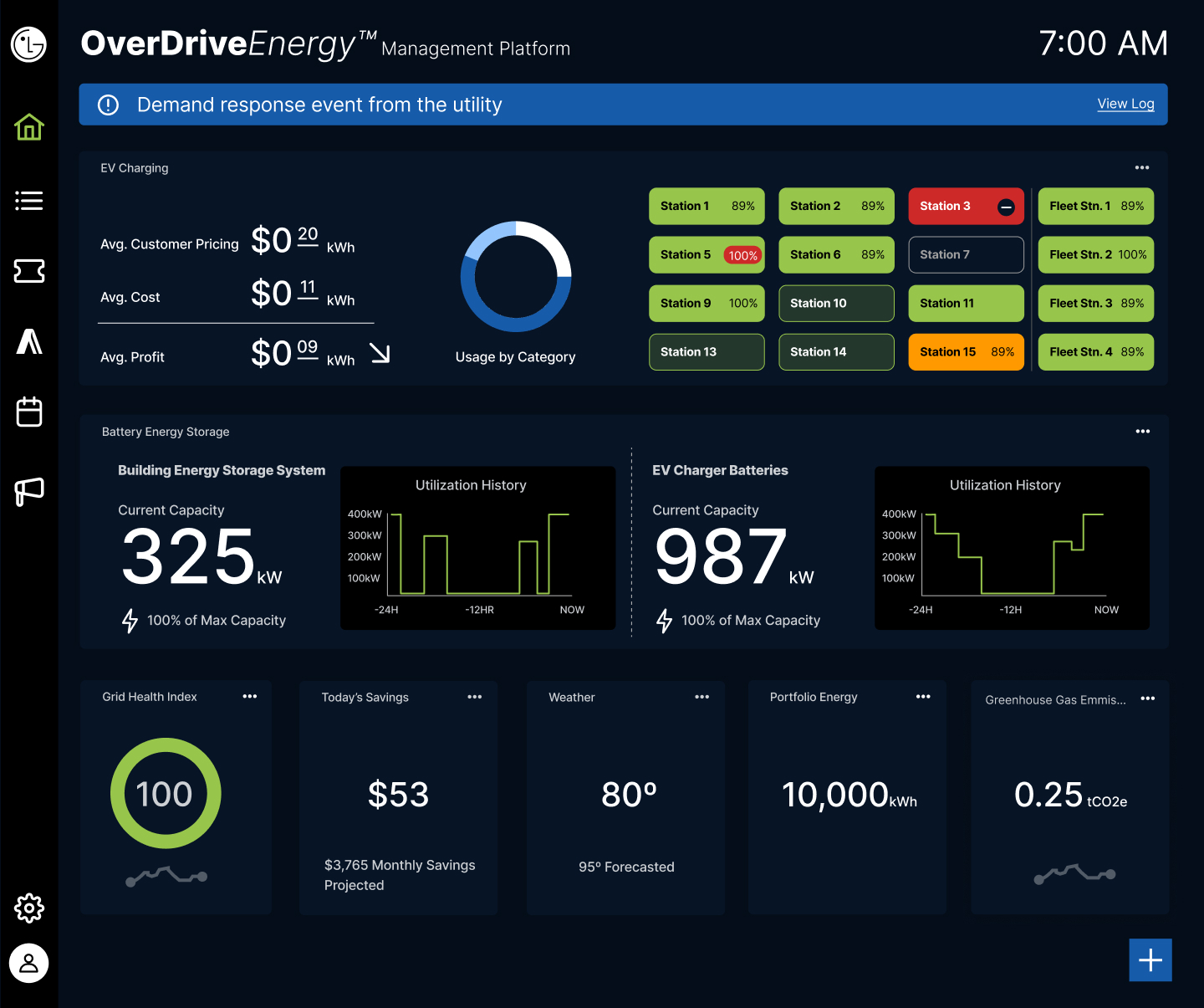
LG hired me to design a modular energy management dashboard for large organizations. I created a flexible, data-driven interface that helped users switch between grid, battery, and renewable power in real time. The platform enabled cost savings, smarter energy use, and alignment with sustainability goals.
My Role
Strategy
UI/UX Design
Visual Design
Timeline
3 Months
As a team, we enabled a potential savings of up to 45% through smart sourcing, load balancing, and renewable energy tax incentives.
The Opportunity
LG hired me to design the interface for their energy management software—a system built to help campuses, corporations, and government facilities optimize their energy use. With advancements in energy monitoring and sourcing, organizations could now shift between grid, battery, and renewable power in real time. The goal was to make these decisions intuitive and actionable—whether the objective was to reduce costs, increase reliability, or meet sustainability targets.
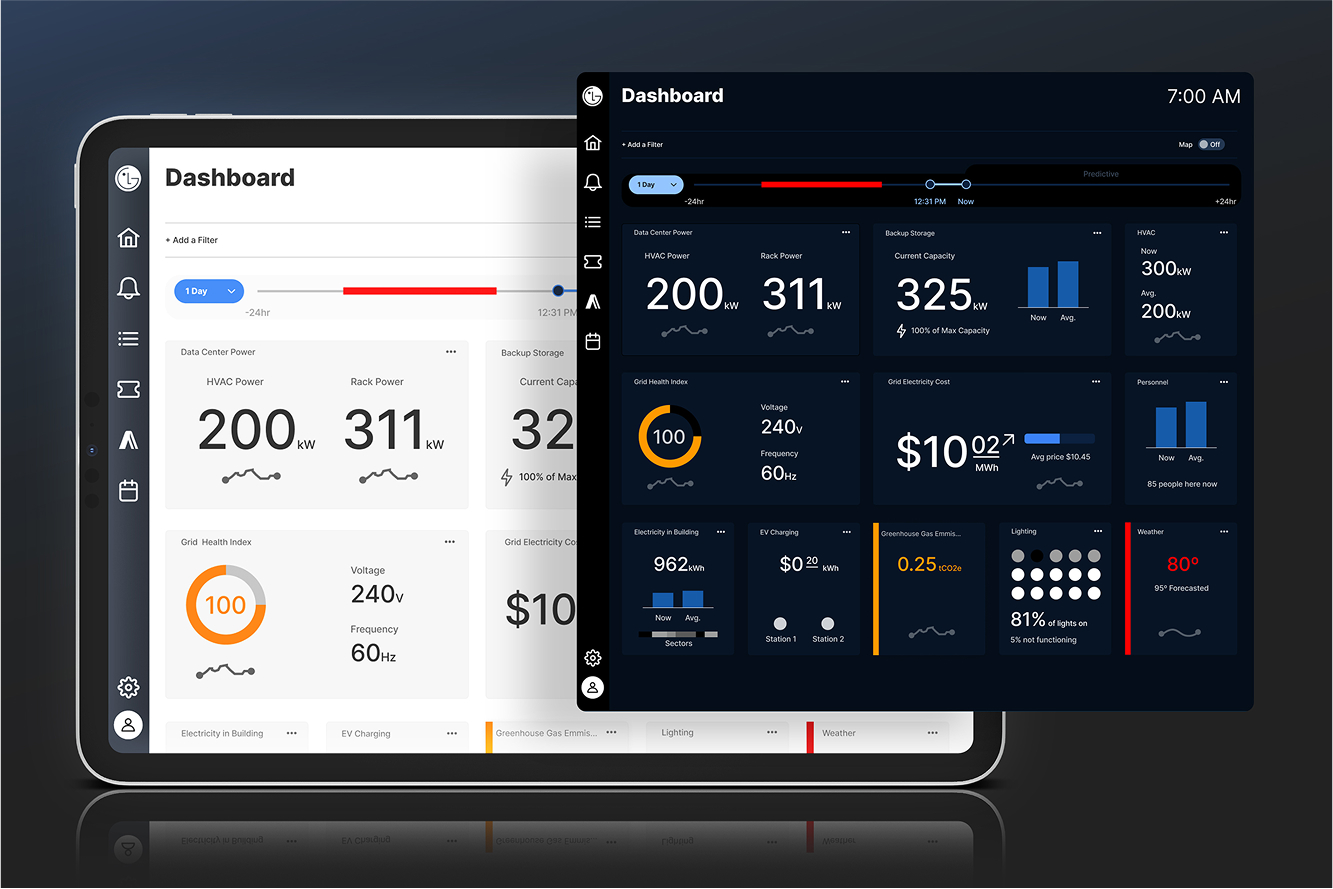
Energy management interface—light and dark themes
The Process
I joined the project at its inception, allowing me to shape the direction through early research and collaboration with SMEs and stakeholders. Project requirements shifted frequently, and use cases evolved as the technology and business model developed. To accommodate this fluidity, I designed a highly modular interface system that could flex with changing needs and adapt across a wide range of displays—from tablets to multi-screen control centers.
Modular Design
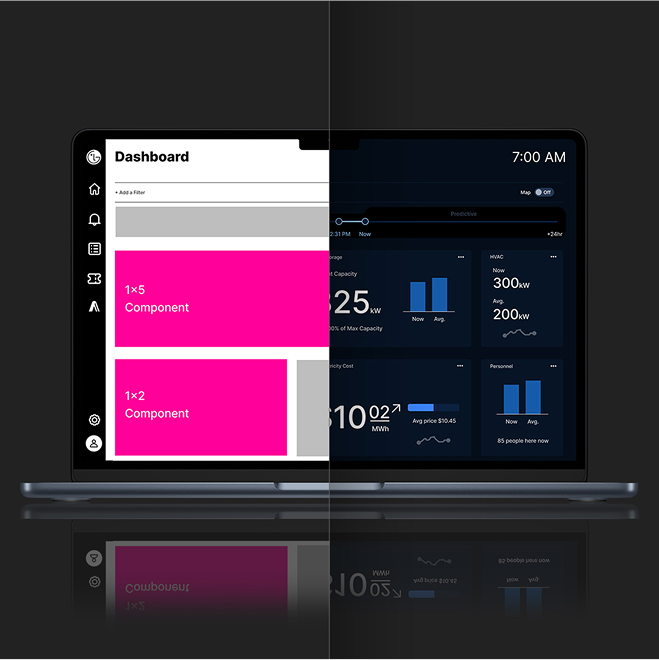
The foundation of the interface was a flexible module framework. Users could add full-, half-, or third-width modules to the dashboard in any configuration. This allowed organizations to customize their layout based on role or use case, and gave LG the ability to create pre-packaged module sets for specific verticals, with optional add-ons.
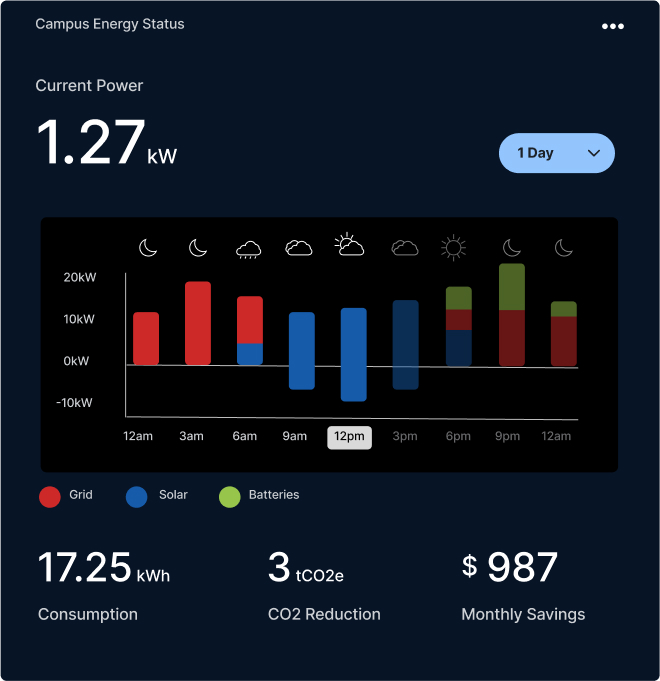
Storytelling with Infographics
Translating raw energy data into simple, actionable insights was critical. I designed infographics that clearly communicated where energy was coming from, how it was being used, and what opportunities existed for improvement. This helped users understand the impact of their decisions—whether it meant pre-charging batteries, reducing vehicle charging, or switching to solar at the right moment.
The Solution
The solution was a modular, multi-touch system that delivered personalized, in-flow product recommendations using generative AI. Agentic AI activated trial features when appropriate, and all components were designed for consistency across products. Message timing and frequency were optimized to balance engagement and user experience.
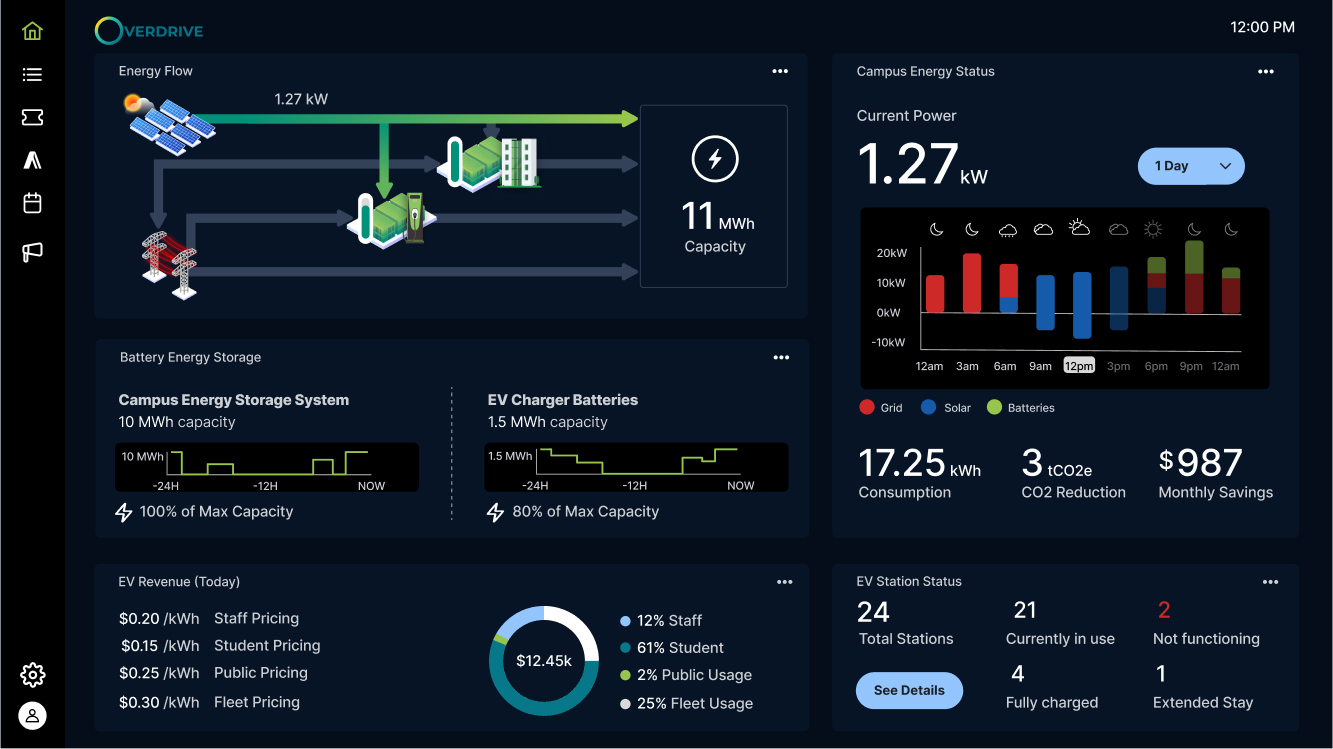
Main dashboard view
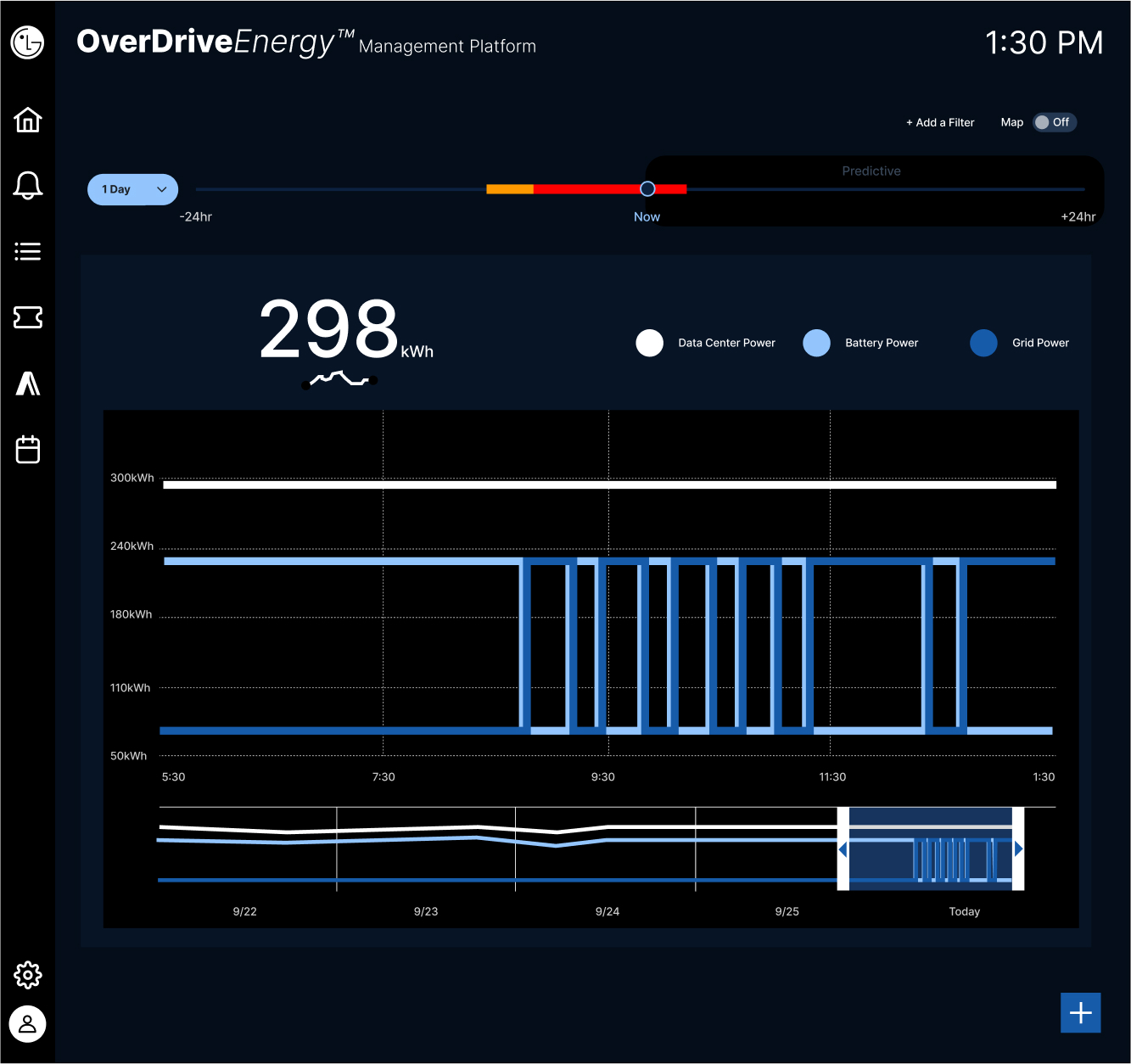
Full screen component view
The Results
The software gave organizations a strategic tool for energy planning—with potential savings of up to 45% through smart sourcing, load balancing, and renewable energy tax incentives. By giving users clear insight and full control, the platform helped shift energy from a cost center to a competitive advantage.